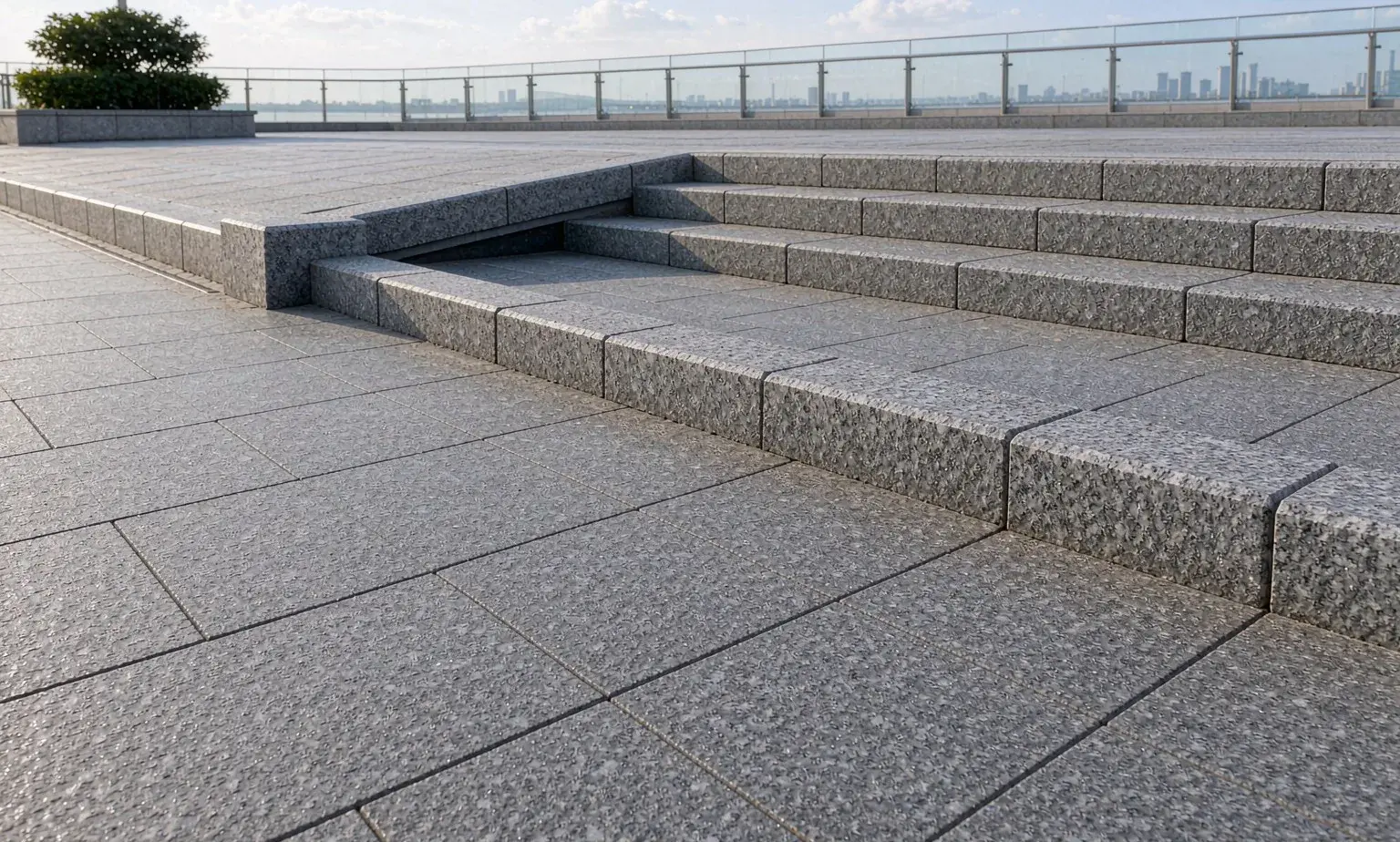
Why granite suits Hong Kong's climate
Granite's hardness, low water absorption and weather resistance make it the most outdoor-capable natural stone: summer sun, typhoon rain and humid springs are all handled. Unlike manmade outdoor tiles it will not fade under UV and stays dimensionally stable for decades. Durable does not mean maintenance-free, though — damp, shaded areas grow moss, and lighter varieties gather pollution and dull down. Care is what unlocks that full lifespan.
The four common problems
First, moss and algae: shaded, tree-adjacent or water-logged spots turn green-black and dangerously slippery. Second, water marks and mineral deposits where rainwater dries down, especially under sprinklers and air-con drips. Third, oil stains near BBQs and outdoor dining, which soak into pores as dark patches. Fourth, weathering: long-term UV and acid rain micro-erode the surface, turning polished faces matte. All four are preventable or fixable with the right approach.
Routine cleaning: steps, tools and taboos
Sweep or blow away leaves and dust, wash with a pH-neutral detergent diluted in water using a soft brush, then rinse. The word that matters is neutral: bleach, alkaline moss killers and acidic cleaners are all off-limits — bleach oxidises and discolours the minerals, acid eats the surface structure. For stubborn moss, scrape the surface layer with a plastic scraper, apply a stone-specific moss remover, allow dwell time, then brush and rinse. Pressure washers are fine at a distance with a fan tip; close-range jetting pits the surface and drives water into joints. Keeping the area dry and ventilated is the real moss prevention.
Sealers: the core of outdoor care
The best investment for outdoor granite is a penetrating sealer: it lines the pores with a hydrophobic, oleophobic layer so water beads and oil sits on top until wiped, and moss struggles to take root without moisture. In Hong Kong's climate re-apply every 12 to 24 months; high-traffic balconies and steps yearly. Application is simple: clean, dry stone, roll or spray evenly, let it absorb, wipe off excess, keep dry while it cures. Choose an exterior, UV-stable formula — or have a professional crew handle it.
Slip resistance: protecting the household
Wet outdoor steps and balconies are where falls happen, with seniors and children most at risk. Practical options: choose flamed, bush-hammered or grooved finishes when selecting stone; existing polished granite can get anti-slip grooving or chemical treatment; and routine moss removal is itself the most important anti-slip work, since wet moss is far slicker than wet stone. A simple test: walk the surface in wet shoes after rain — grip means fine, slipping means book a treatment. Anti-slip work is one-off; maintenance keeps it effective.