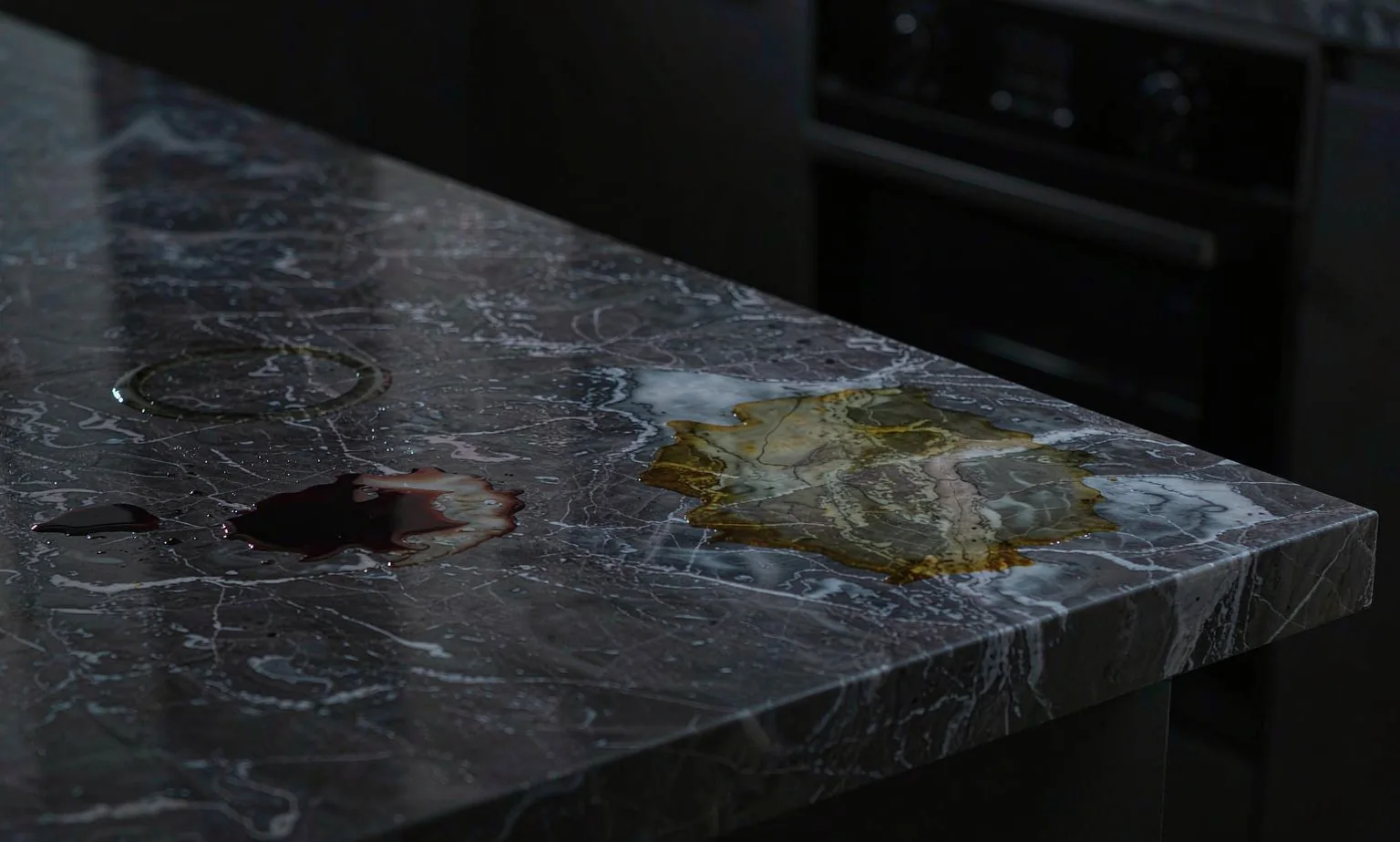
Penetrating versus film-forming sealers
Penetrating sealers line the capillary walls without changing appearance or breathability, and are the standard for stone. Film-forming sealers and coatings sit on the surface, adding gloss but altering touch and breathability, and must be ground off before reapplication. Homes and commercial projects generally use penetrating sealers.
When and how to apply
Apply after installation and grouting, once the surface is clean and dry. Cement bedding must cure fully, usually 7 to 14 days, or trapped moisture causes water staining. Apply evenly, allow it to penetrate, wipe off excess, and repeat once or twice as the product instructs.
How often?
Low-traffic interiors every 12 to 24 months; kitchen countertops, bathrooms and dining areas every 6 to 12 months; malls and office lobbies under an annual maintenance contract. To test, drop water on the surface: if it is not absorbed within five minutes, protection is still effective.
Common misconceptions
One: sealing prevents scratching - it only reduces staining, not scratches or etching. Two: one application lasts forever - the layer wears with use. Three: sealing before the stone is dry - this traps moisture and causes water stains. Four: using the wrong product - granite and marble sealers can differ, so check suitability.