Many Hong Kong homeowners love the natural veining and luxury of a marble countertop, yet worry it scratches or stains easily. The truth is marble suits some cooks and not others. This guide breaks down the real pros, cons, best-fit users and care tips so you can decide with confidence.
Three Strengths of Marble Countertops
1. Unique veining and luxury look: Marble is a natural stone; no two slabs are alike. A white marble (Carrara, Calacatta) island instantly becomes the focal point of a Hong Kong apartment kitchen.
2. Cool, pleasant touch: Marble stays cool and feels great in summer for pastry, dough and everyday prep — something quartz and stainless cannot match.
3. Renewable and repairable: Etched or dull marble can be re-crystallised and polished back to gloss; small chips are fixable with marble adhesive, unlike severely scorched engineered stone.
Three Things to Watch
1. Acid etching: Marble is calcium carbonate; lemon, vinegar and tomato sauce can dull the surface. Wipe acidic spills immediately.
2. Absorption: Micro-pores can take in coffee, wine and soy if left. A good impregnating sealer reduces risk but is not a permanent shield.
3. Maintenance: Unlike quartz, marble benefits from sealing and crystallisation every year or two to keep it water-repellent and glossy.
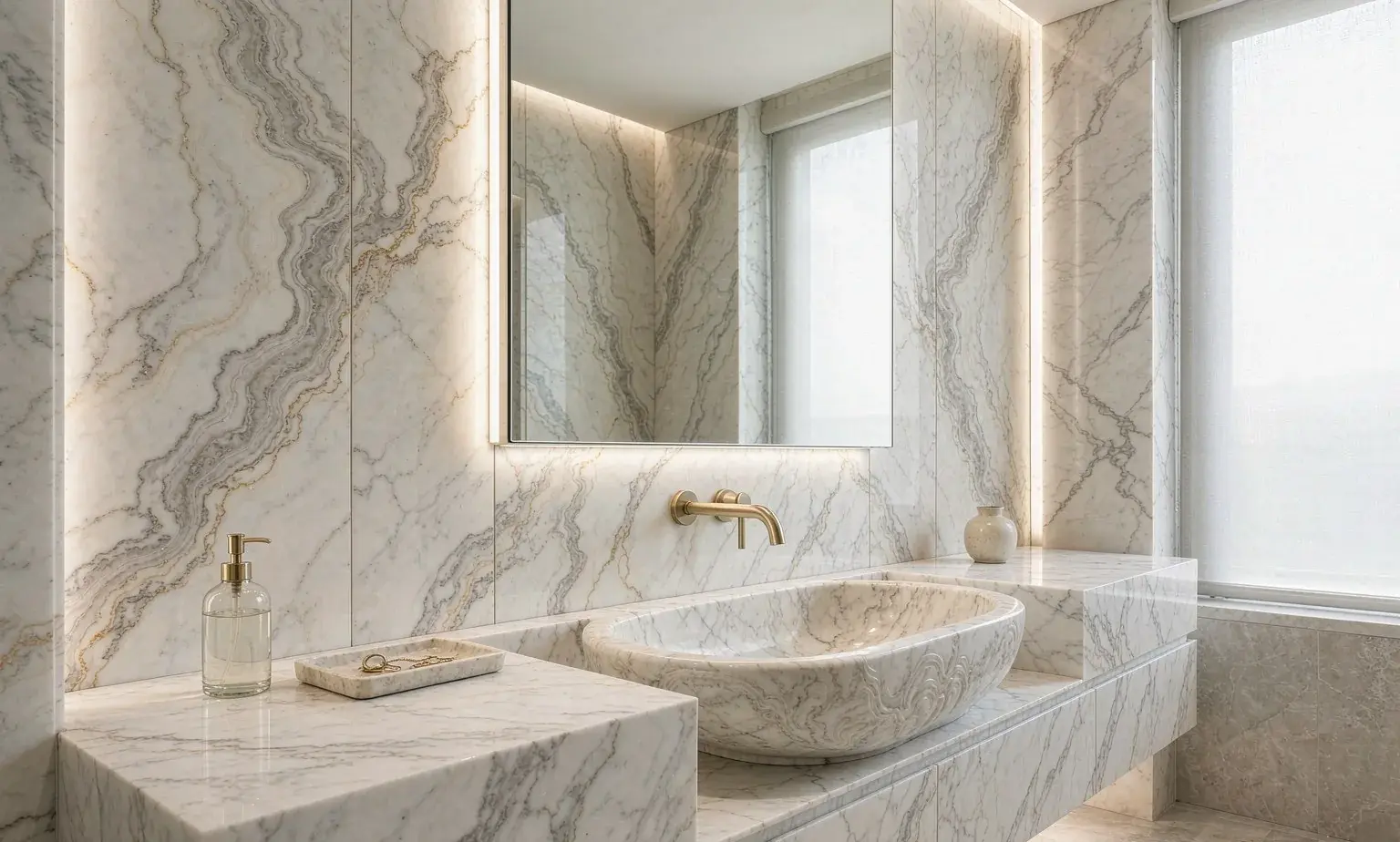
Who Should Choose Marble in Hong Kong?
If you cook lightly, love plating and value looks, marble is a strong pick. If you stir-fry daily, leave acidic items around and want zero upkeep, compare kitchen countertop materials — quartz or sintered stone may fit better.
Marble vs Quartz vs Sintered Stone
- Marble: most beautiful and cool, renewable, but needs acid/stain care.
- Quartz: low maintenance and stain-resistant, mid price, but hates high heat and looks less natural.
- Sintered stone: extremely stain- and heat-proof, thin profiles, but brittle and joint-sensitive.
Installation & Care Tips
Seal the slab professionally, and be extra careful with acids in the first months. Use neutral cleaner and a soft cloth; avoid bleach and abrasive powder. See the marble care guide. Book a free on-site measurement to plan edges and supports.