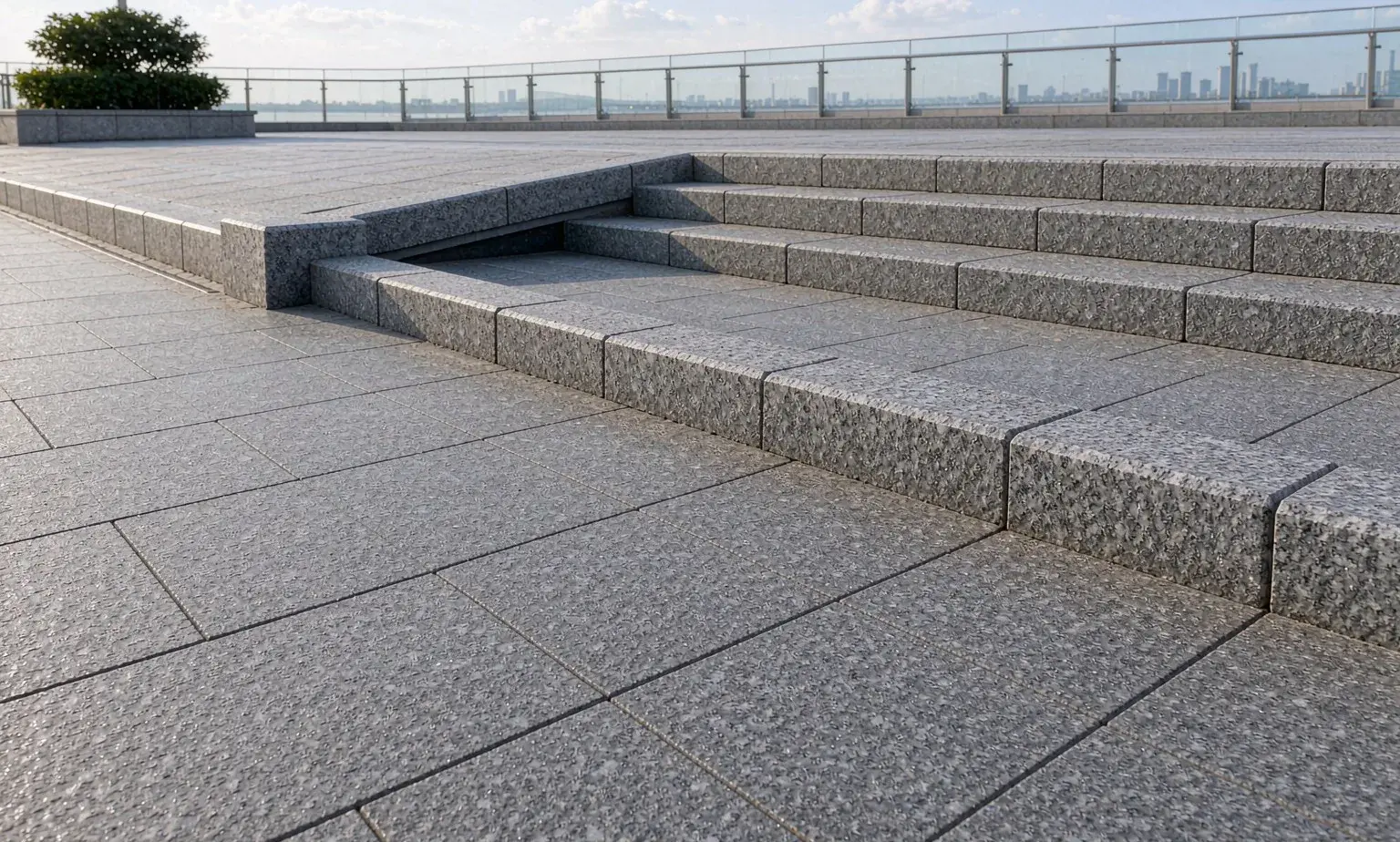
Why granite outdoors?
Granite is 6 to 7 on the Mohs scale with absorption below 0.5 percent and high compressive strength, so it will not warp or fade in sun and rain, and flamed or bush-hammered finishes add grip. Marble is vulnerable to acid rain, becomes slippery when wet and wears faster, so it is generally not recommended outdoors.
Drainage and falls matter more than material
Outdoor paving needs a drainage fall, generally 1 to 2 percent, with adequate outlets, and a free-draining substrate so standing water does not cause efflorescence. Rooftop paving must also consider waterproofing and heat insulation; raised pedestal systems make later inspection and repair far easier.
Slip resistance and cleaning
With high slip risk outdoors, choose flamed or bush-hammered finishes targeting R11 to R12. Rough textures trap dirt, so schedule periodic pressure washing; treat moss with dedicated cleaners rather than prolonged bleaching.
Travertine, sandstone and other options
Travertine and sandstone have a natural, warm character suited to garden paths and feature walls, but pores collect water and dirt, so specify filled or closed-face finishes and avoid permanently wet locations. Driveways need sufficient thickness, 30 mm or more, and granite with high compressive strength.