Three tests for stone in a pet home: scratch, stain and slip
A pet household tests stone in ways a normal home never does. Scratch resistance: claws and toys move across floors and counters daily, so the surface must be hard enough. Stain resistance: urine, food scraps and drool touch the stone constantly, so it should not soak in colour. Slip resistance: running and dashing pets can slip and hurt themselves, especially older animals. Judge every stone by these three dimensions and you will not choose wrong. Hong Kong's humidity adds one more: the stone needs sealing to stop pet odours building up.
Marble vs granite vs quartz: which suits pets best
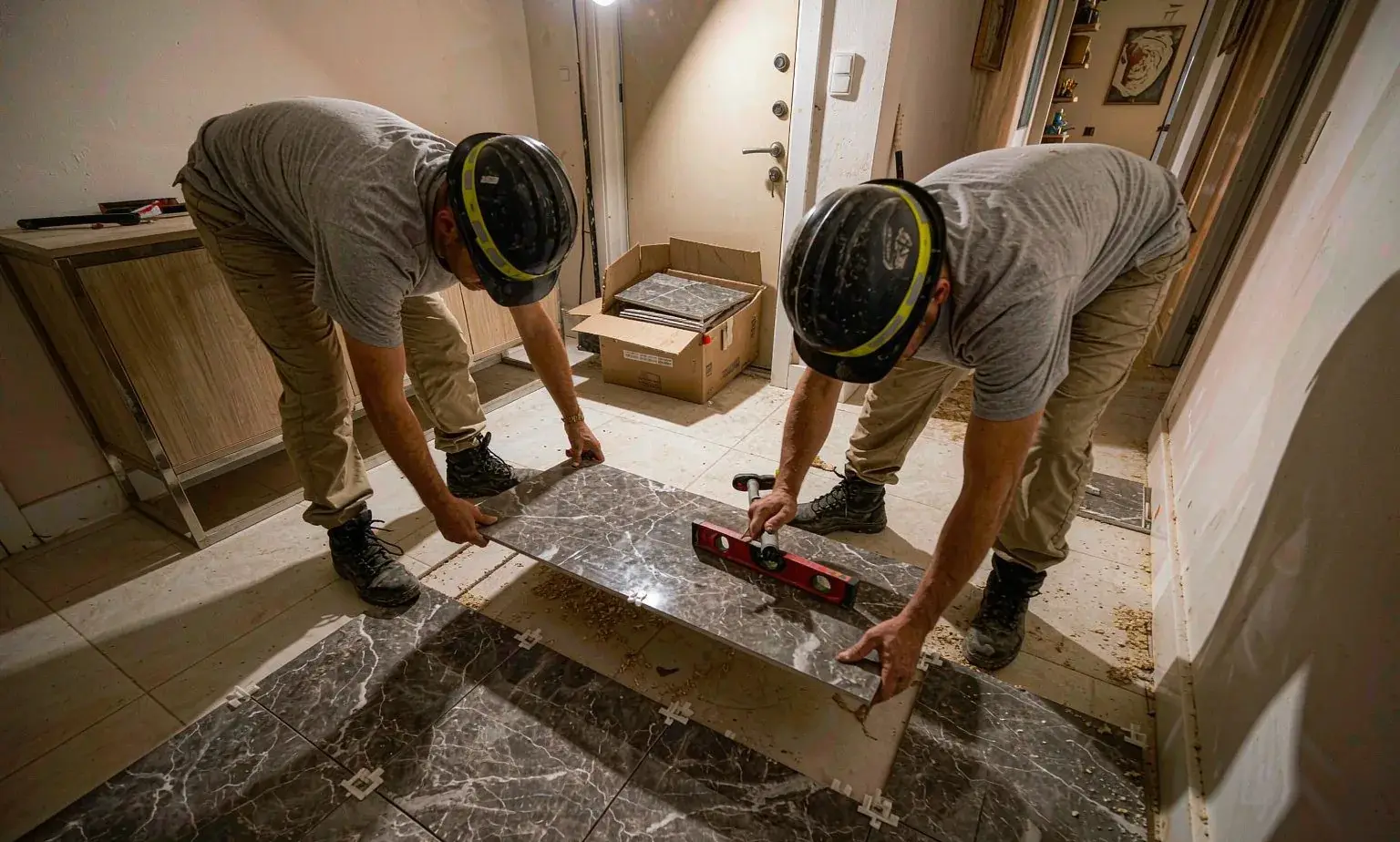
Each stone has strengths in a pet home. Granite is the hardest and most scratch-resistant, with low water absorption — the top choice for floors in homes with active dogs. Quartz (engineered stone) is non-porous and the most stain-proof, so urine and food scraps cannot soak in; it is the easiest to clean and ideal for kitchen countertops. Marble is the most beautiful with unique veining, but it is porous and slightly softer, so it needs a penetrating sealer and lighter honed varieties to suit a pet home. In short: granite for floors, quartz for counters, marble if you want beauty but only with proper sealing.
Will cat claws scratch marble? The hardness truth
Marble measures about 3 to 5 on the Mohs scale, and a cat's keratin claws are actually softer than marble — normal clawing will not scratch the surface. The real culprits are grit from cat litter and sand grains carried in on dogs' nails. So scratch prevention is less about claws and more about a doormat at the entrance and regular nail trimming. Note that a polished finish shows fine scratches more than a honed finish, so pet homes should prefer honed or textured marble varieties where daily wear stays less visible.
Pet urine and odours: first aid and removal
The biggest threat from pet urine is penetration into the stone's pores: marble and granite both have natural pores, and dried urine leaves yellow stains and odours. First aid: soak up the liquid with paper towels immediately, then wipe with a neutral cleaner — never bleach, which discolours stone. The long-term fix is a penetrating sealer that creates a water- and oil-repellent layer, so urine stays on the surface for you to wipe away. Quartz is the most worry-free here because it has no pores. For stubborn odours use a stone-specific deodoriser or a baking-soda poultice, and call a professional for severe cases.
Anti-slip: so running pets don't slip
With pets sprinting around, slip resistance matters. Stone gets it in two ways: choose a honed or anti-slip finish (flamed, bush-hammered), and control the R-value — wet areas like bathrooms and kitchens need R10 or above to be safe. Polished marble living-room floors look great but can be slippery for a running dog, so add local anti-slip mats or choose honed varieties. Granite is naturally slightly rough and performs well, making it the safe floor choice. Remember the area around the water bowl: it is the most likely place to pool water.
Cleaning and daily care: habits for pet homes
Pet homes need to clean stone more often than normal. Vacuum or mop daily, and deep-clean weekly with a neutral cleaner. Always use a neutral, bleach-free cleaner so it is safe even if pets lick it. Reapply sealer roughly every 12 months to keep the water-repellent layer. Grout lines trap pet hair and grime, so brush them with a soft brush. With these habits, stone and pets coexist beautifully for years, keeping the home both elegant and clean.