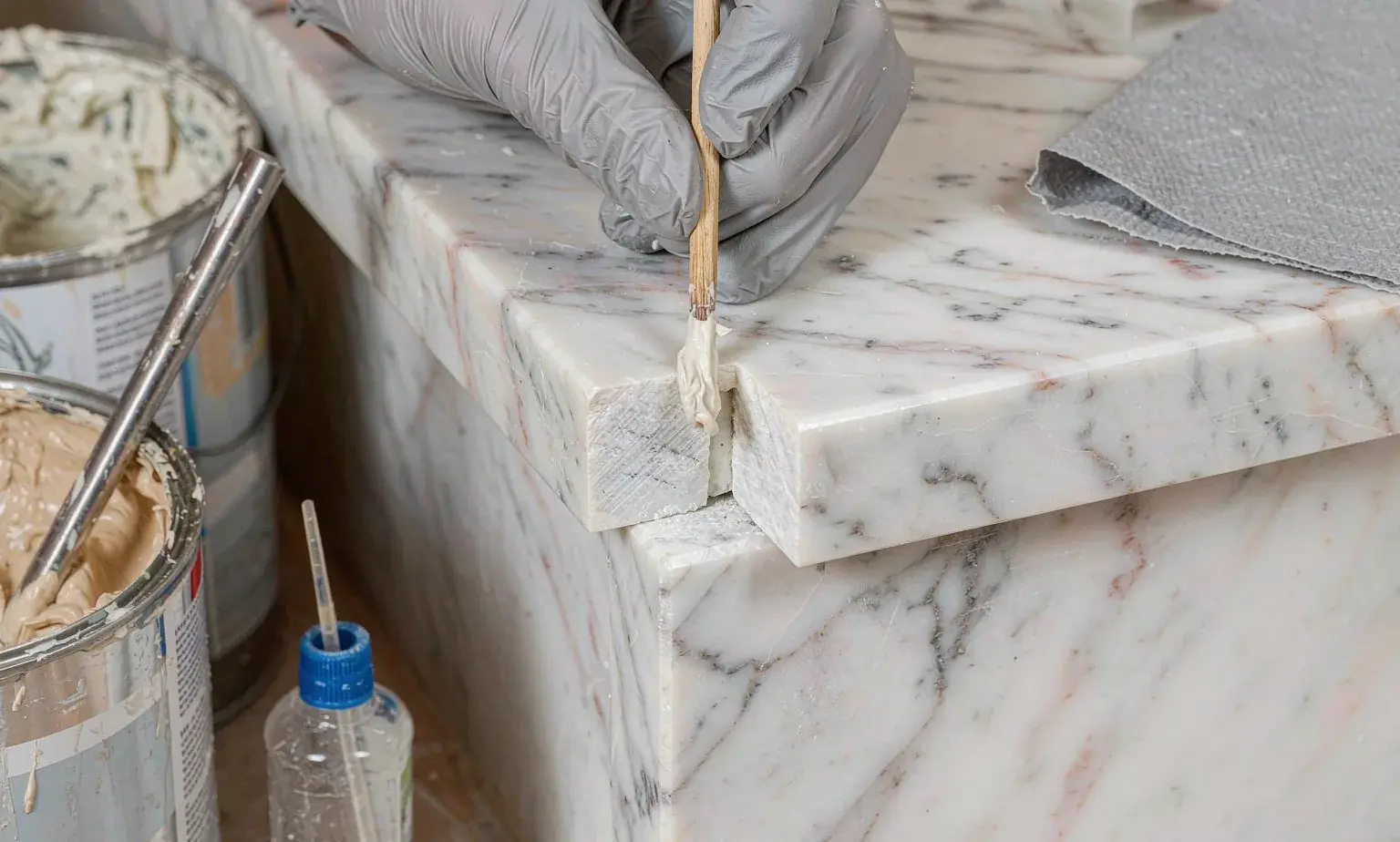
Assess first: polish or re-lay?
If the existing stone is structurally sound and only worn or dull, grinding and crystallisation restore it at lower cost and shorter programme. Hollow areas, cracks, broken nosings or a loose substrate require partial or full re-laying. Always begin with a site assessment.
Slip resistance above all
Specify slip-resistant finishes (flamed, bush-hammered, fine-sand) and anti-slip grooves, especially at the nosing. Public stairs should target R11 to R12; residential stairs balance grip against cleaning. Where existing treads are too slippery, add anti-slip strips or coatings.
Nosings and edges
The nosing, or leading edge, is the most chip-prone area: inspect and repair it during renovation, using a bullnose, chamfer or anti-slip insert. Finish edges with matching stone or metal trims so water and dirt cannot collect.
Programming the works
Public stair renovation is usually phased to keep one route open for residents. Walk-up buildings have narrow stairs and no lift, so handling and access need planning. Grinding and polishing typically take one to two days per floor; re-laying takes longer.