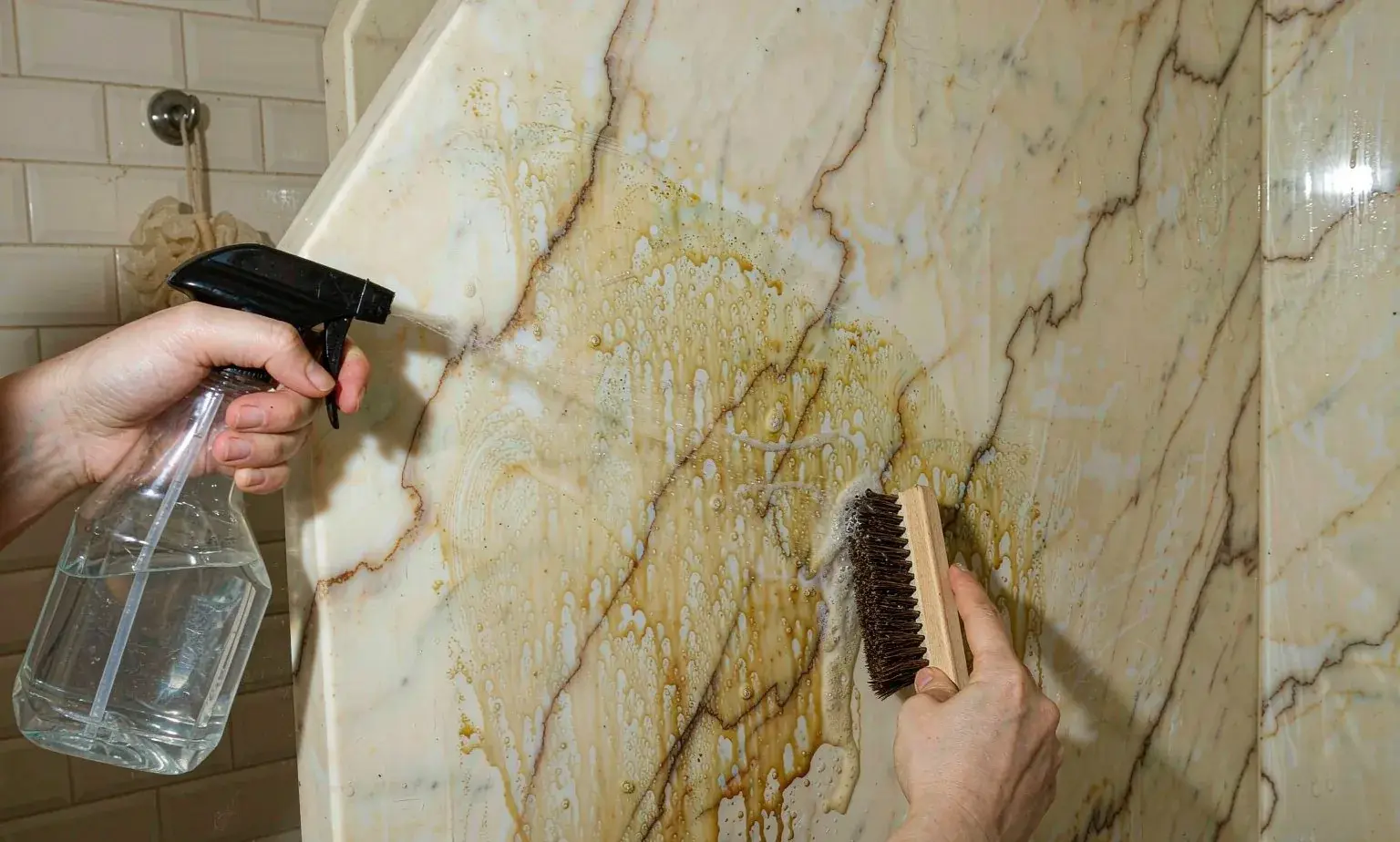
Myth 1: clean marble with vinegar or lemon
'Vinegar is the most natural cleaner' is the number-one killer of marble. Marble is mainly calcium carbonate, which reacts with acid — the surface corrodes, dulls and loses its shine, and severe cases leave permanent 'acid-etch' white marks that cannot be wiped away. Lemon juice, vinegar, toilet cleaner and some kitchen cleaners are all acidic and must never touch marble. The correct approach is a neutral cleaner (pH around 7) diluted in water, or a cleaner made for natural stone. Remember: acid and marble do not mix.
Myth 2: use bleach or strong alkali to remove stains
The opposite extreme is bleach or caustic soda for stain removal. Strong alkalis break down the mineral structure of the stone surface, causing oxidation, discolouration, white haze or fading — most visible on light marble. Some people think 'bleach removes mould', but bleach actually bleaches the stone into patches and destroys the protective layer. Use a stone-specific mould remover for mould and a neutral cleaner or professional poultice for stains. In short: marble tolerates neither acid nor strong alkali.
Myth 3: marble needs no maintenance
The other extreme is 'marble is stone, leave it alone'. Marble has natural pores that absorb water, oil and stains; unprotected marble gradually soaks in colour, darkens and collects grime. Correct care is prevention-first: apply a penetrating sealer right after installation or restoration, then reapply every 12 to 24 months. Wipe up liquid spills immediately before they soak in. With a regular sealing habit, marble keeps its shine for decades.
Myth 4: wax it, or use oily wax
Waxing itself is not wrong — using the wrong wax is. Oily wax and floor wax form a film that clogs the pores, trapping the stone, and over time it yellows, dulls and collects dust, making future restoration harder. What marble really needs is crystallisation: a professional machine and crystalliser build a crystal layer that is glossy and wear-resistant. So marble care is not waxing but crystallising; if you use anything, use a water-based stone crystalliser, never household floor wax.
Myth 5: sand or wire-brush scratches yourself
When marble scratches or dulls, many people buy DIY polishing tools or reach for a wire brush or sandpaper. This is high-risk: without professional tools and technique, DIY grinding makes scratches deeper and dulls a larger area, and can even wear through the surface beyond repair. A wire brush scratches a web of fine marks. The right approach: light scratches can be treated with professional polishing compound; deep scratches or large dull areas need a professional restoration team that grinds and polishes through progressively finer pads. Don't try to save money on what you cannot fix.
The golden rules of marble care: three dos and three don'ts
Here is an easy set of rules. Three dos: use a neutral cleaner; apply penetrating sealer and reapply regularly; hand deep scratches and large dull areas to professional crystallisation. Three don'ts: never use acidic cleaners (vinegar, lemon, toilet cleaner); never use bleach or strong alkali; never grind or wax it yourself. One extra tip: improve ventilation in humid seasons to reduce standing water on the stone. Follow these rules and your countertops, floors and feature walls stay beautiful and durable. HENGSHENG MARBLE offers free care advice and professional restoration — get in touch anytime.