What you can absolutely do yourself
Daily care is well within DIY reach: dust daily with a dry mop or cloth — grit is the number one cause of polished-surface scratches; damp-mop weekly with pH-neutral detergent; wipe spills immediately, since red wine, coffee and juice stain deeper the longer they sit; and re-apply a penetrating sealer yearly, following the label — low skill required. Do these four things and marble stays in good condition for years, no professional needed.
Where DIY makes it worse
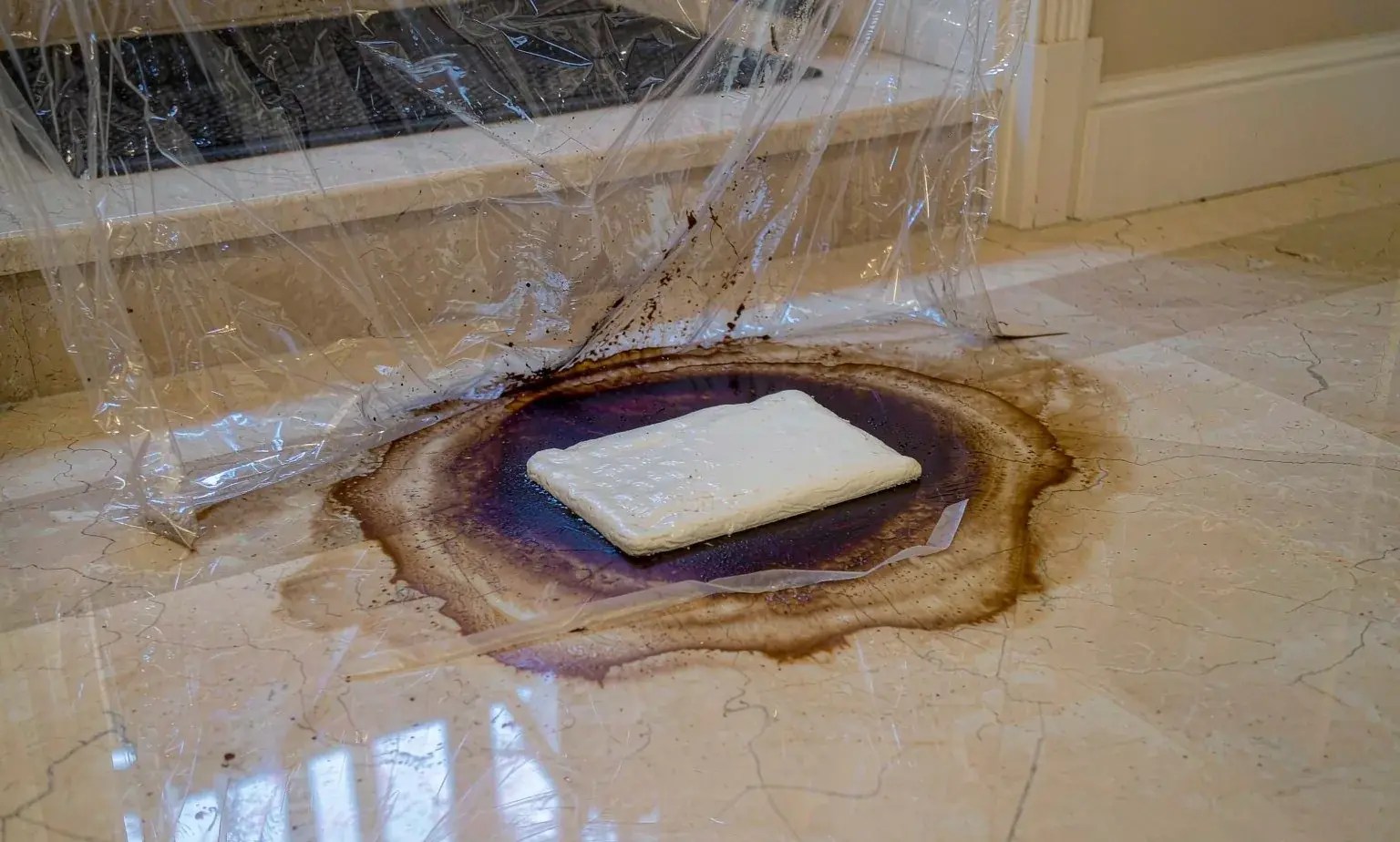
Some jobs carry more risk than savings: deep stains — home remedies like bleach often remove the stain's colour but etch the surface, and mineral discolouration is irreversible; crystallisation — needs a weighted machine and staged chemistry, hand-rubbing leaves patchy marks; chips and cracks — proper repair means colour-matched epoxy plus re-grinding, DIY fillers show visible colour gaps; widespread dullness — needs diamond abrasives from coarse to fine, hand tools cannot produce an even finish. These processes are about equipment and experience, not chemicals.
The three most common DIY mistakes
Wrong cleaner: vinegar, lemon, glass cleaner and limescale removers are acid or alkaline marble killers — one wipe can etch the polish into a dull patch. Believing internet hacks: toothpaste, soda and aggressive magic erasers all damage the surface — a magic eraser is effectively fine sandpaper. Delay: a fresh stain becomes a deep stain in days; a chip left for months lets water into the substrate, turning a simple fix into a big job. In stone care, the most expensive word is later.
What the professionals actually do
Five core processes: grinding restoration — diamond abrasives from coarse to fine remove scratches, dullness and shallow stains, restoring factory gloss; crystallisation — steel wool and chemicals under a machine build a harder, glossier, more stain-resistant layer; professional sealing — even, saturated penetrating sealer that outlasts DIY application; local repair — colour-matched epoxy for chips, re-ground invisible; deep stain poulticing — a chemical poultice draws the stain back out, one to several sessions depending on age. Each needs dedicated equipment.
Running the numbers
DIY daily care costs almost nothing; a yearly sealer is a few hundred dollars. A lightly dulled countertop professionally restored and crystallised costs roughly one to two thousand; but if wrong chemicals cause deep etching, restoration starts from coarse grinding and costs a lot more — damage too deep may mean replacing the top entirely. The clear conclusion: daily care and prevention are yours; repair and craft are ours. And one more saving: a supplier with its own factory has no middleman — the same process typically costs twenty to thirty percent less.
A simple rule to finish
Here is the rule: if the problem is on the surface and cleaning or sealing can address it, DIY; if it is inside the stone and needs machines and craft, call a professional. Unsure? Send photos for a free honest assessment — sometimes the professional advice is simply wipe it twice more and save your money. HENGSHENG offers on-site assessment, restoration, crystallisation and sealing, factory-direct pricing, one stop. Cared for properly, marble lasts a lifetime.