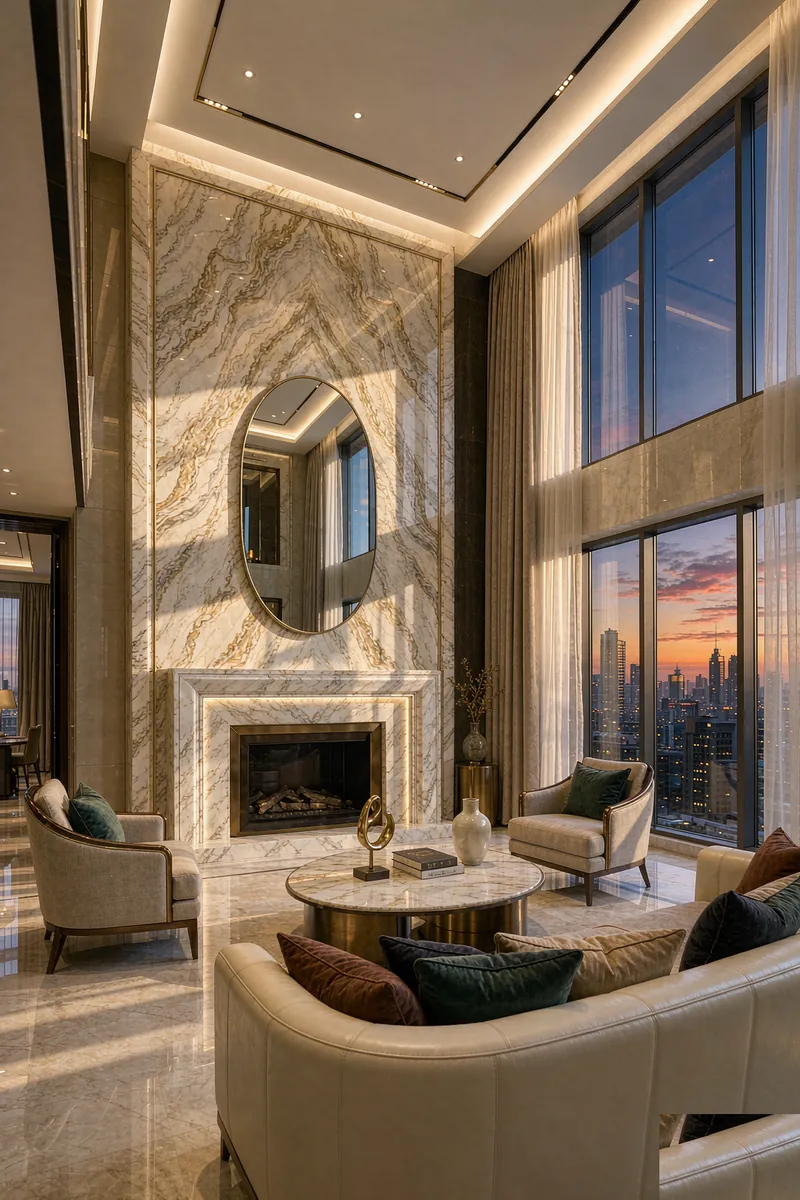
Material: which stone suits?
Decorative electric fireplaces emit little heat, so marble, granite and travertine all work. Real-flame or bioethanol units run hotter, so use granite or heat-rated panels and strictly follow the appliance manual's minimum clearances. Light marble near a sustained heat source may discolour slightly, so assess first.
Build-up: heat dissipation and expansion joints
Allow ventilation and heat dissipation space around the appliance per the manual, and leave an expansion joint between stone and appliance, finished with heat-resistant, mould-resistant sealant, so thermal expansion cannot crack the stone. Use heat-rated adhesive and anchors for the stone backing rather than standard marble adhesive exposed to heat.
Design: proportion and depth
The fireplace wall is usually the living room focal point, so proportions should match wall width. A book-matched backdrop adds depth, or the stone can run as one continuous wall incorporating the TV. Keep distance between appliance and television so heat does not shorten the TV's life.
Installation and care
Install the appliance frame first, then the stone, to ensure alignment; cut-outs should be factory-made. Seal after completion, avoid acidic cleaners in daily care, and check expansion joints periodically, resealing when they age.