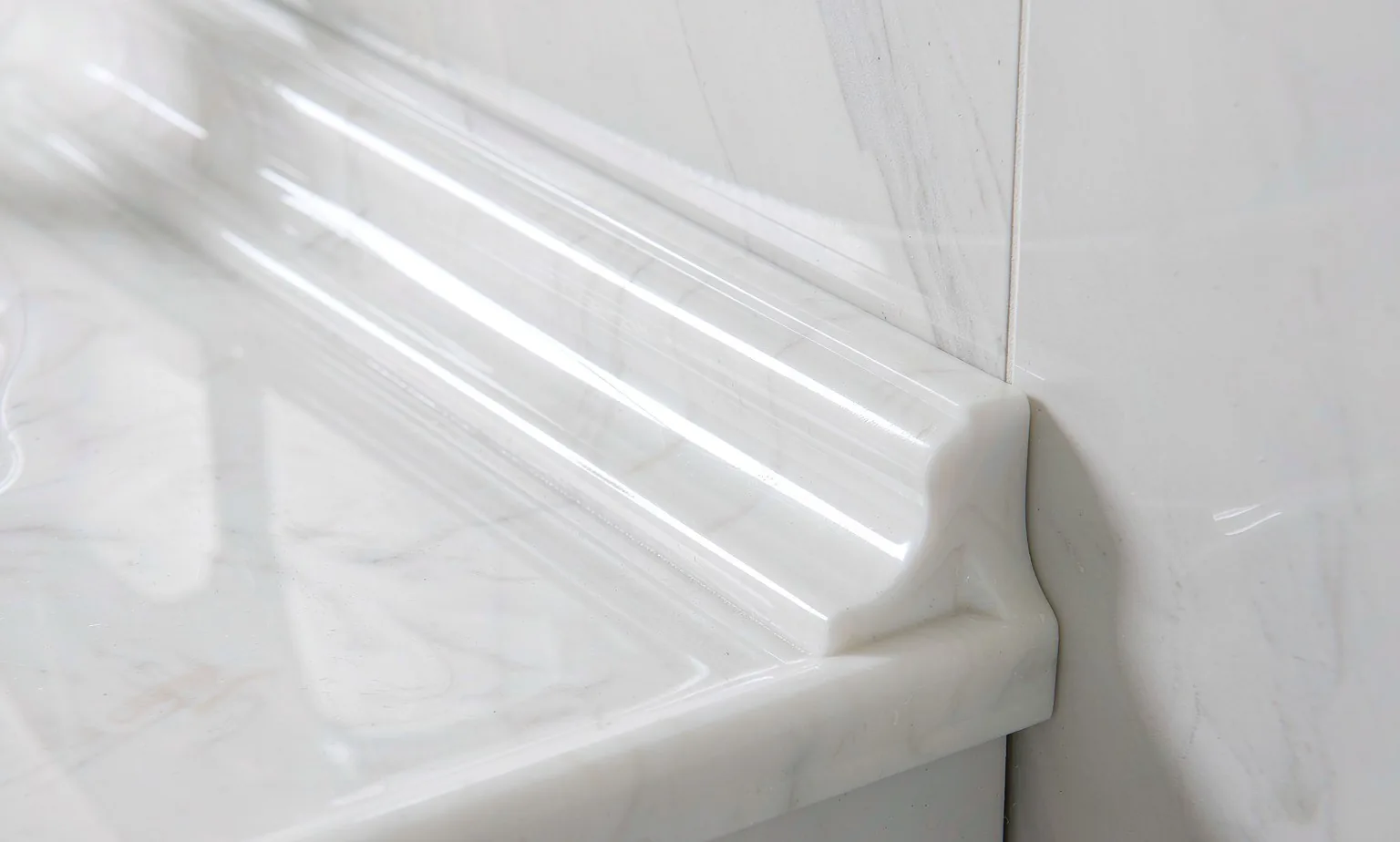
Common profiles
Eased or straight: the most minimal and easiest to clean, suited to contemporary interiors. Bullnose: fully rounded, soft to touch and the safest option for families with children and stair nosings. Bevel or chamfer: an angled cut giving clear light and shadow, ideal for countertops and window sills. Half bullnose: rounded on top, straight below, balancing looks with fitting against a wall.
Built-up edges
Countertops are 20 mm thick; a built-up or mitred edge creates a 40 to 60 mm visual thickness, making islands and reception counters feel substantial. Pay attention to veining alignment at the mitre and to sanding quality.
How to choose
Children or elderly users: bullnose is safest. Contemporary style: eased or a small chamfer. Depth and shadow: bevel. Presence: built-up. Stair nosings: bullnose with anti-slip grooves. Window sills: chamfer with a drip edge.
Fabrication and junctions
All profiles should be machined in the factory to drawing for consistency; site sanding rarely matches. Junctions such as countertop to wall need matching stone or mould-resistant sealant. Exposed edges should be sealed so moisture cannot enter from the edge.