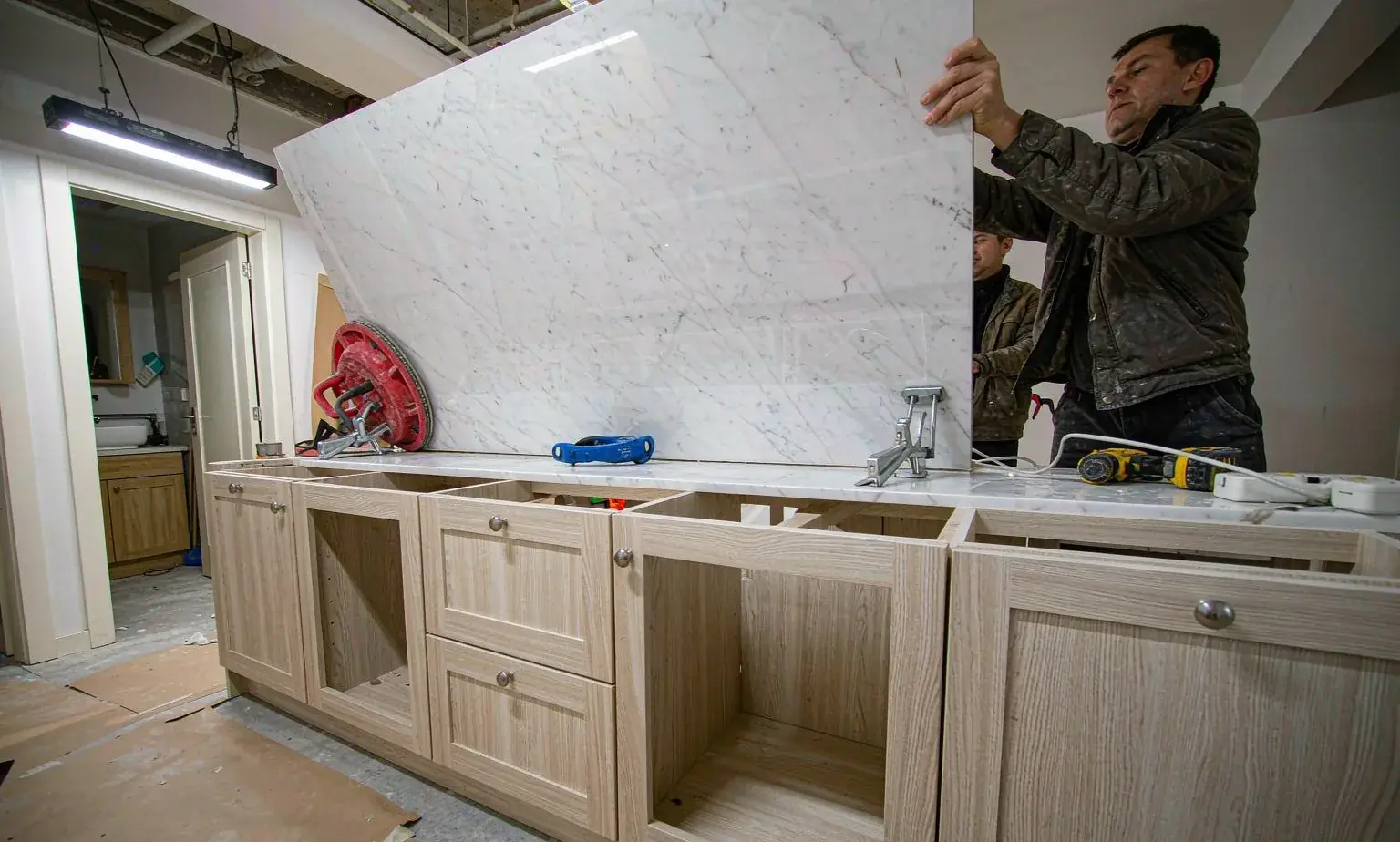
Material: balancing performance and looks
Granite or engineered quartz are the first choices: heat resistant, hard wearing and acid safe. Marble works if you want dramatic veining, but accept sealing and etching risk. Sintered stone suits those wanting maximum heat and stain resistance with large panels and few joints.
Built-up edges
Countertops are usually 20 mm thick; a built-up edge or mitred 45 degree edge creates a visual thickness of 40 to 60 mm, looking substantial without a proportional increase in weight or cost. Ensure the built-up joint is sanded smooth and the veining aligns as closely as possible.
Cut-outs: sockets, sinks and taps
Place socket cut-outs on the side or concealed beneath the top rather than in the centre, where they break the veining. Sink cut-outs need enough margin, generally not less than 50 mm, and waterproofing at the opening. All cut-outs should be factory-made to drawing, never cut on site.
Joint placement and waterjet inlay
If the island is longer than a slab, a joint is unavoidable; keep it away from the sink and on the least visible side. Marble can be vein-matched so the joint reads naturally. For waterjet inlay, such as a floor medallion pattern extended onto the top, fix the design early and have the factory cut it.