Five things to check
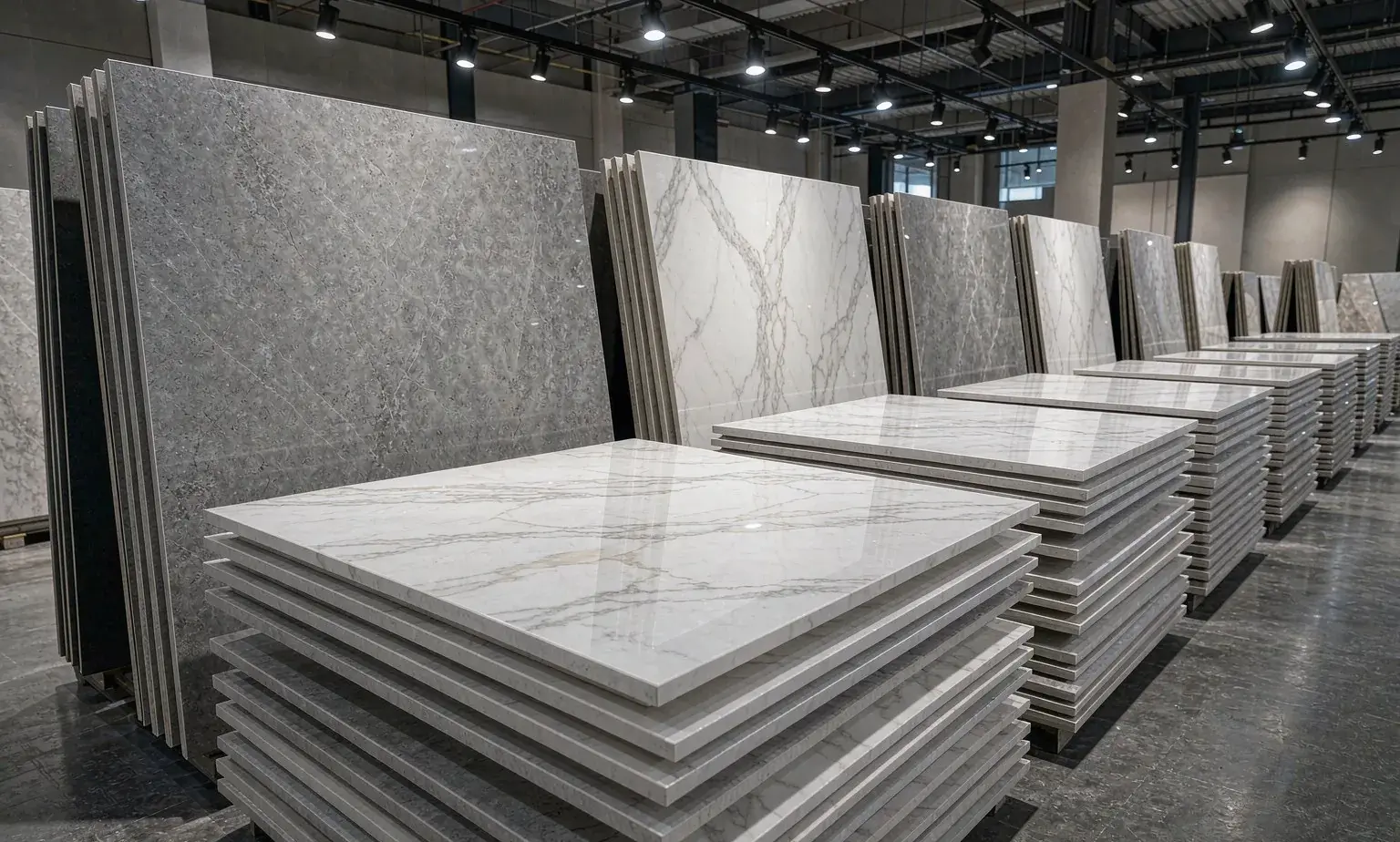
1) Vein direction, which determines book-matching and vein-matching results. 2) Colour variation, since different batches of the same variety can differ markedly in background tone. 3) Cracks and resin repairs, which are normal in marble - check they look natural. 4) Gloss, whether polished surfaces are even with no dull patches. 5) Defects, including the distribution of pores, colour spots and black dots.
Avoiding batch colour variation
State "same batch" and "book-matched from one slab" when ordering, and ask for factory dry-lay photographs before delivery. Large projects must reserve sufficient quantity up front to avoid mid-project top-ups from a different batch. We can hold stock from one batch and supply layout photographs for approval.
Do samples differ from the real slab?
Yes. A sample is one corner of a slab and cannot show the veining distribution or colour range of the whole piece. Always view the full slab after seeing samples, or ask for slab photographs and layout drawings. If visiting is difficult, we can send free samples.
Getting the most from a showroom visit
View in both natural light and your site lighting. Look at the slab standing and lying flat, since direction changes the look. Bring site photos, wall colour chips and fabric swatches to compare. If you need matching, allow time to review the dry lay rather than a single piece.