Many Hong Kong renovators debate sintered stone vs marble. Sintered is stain- and heat-proof with zero upkeep; marble offers natural veining and a sense of value. They are not 'which is better' but 'which fits your scene'. This guide uses five dimensions.
Dimension 1: Heat & Stain
Sintered stone is fired at extreme heat — near-perfect against heat and stains; hot pans and soy are no issue. Marble fears acid etch and absorption and needs sealing. Sintered wins clearly here.
Dimension 2: Veining & Feel
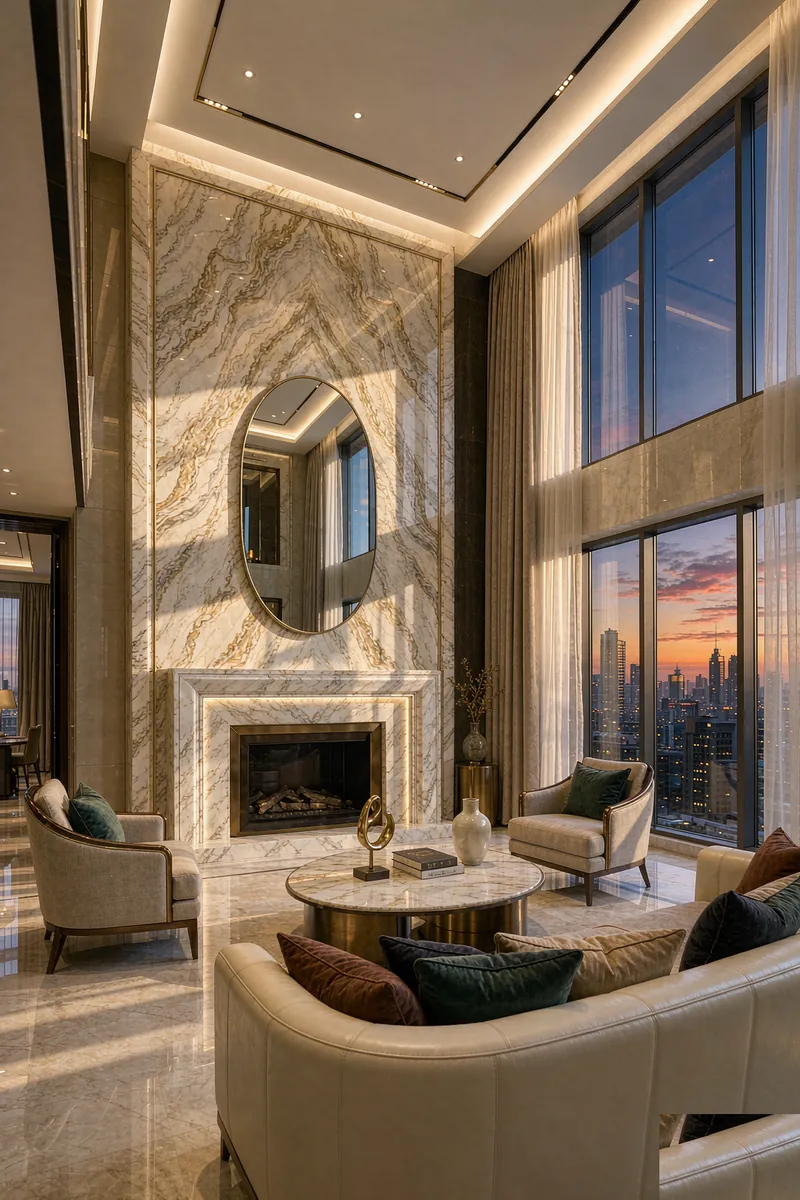
Marble's natural depth and life cannot be matched by sintered prints, which look clean but industrial. Want natural soul? Marble. Want uniform minimal? Sintered.
Dimension 3: Value & Renewal
Marble can be re-crystallised when dull and prestige marbles hold value; chipped or deeply scratched sintered is hard to fix and has no natural-value story. See sintered vs marble vs quartz.
Dimension 4: Fabrication
Sintered is thin and brittle; cuts and corners need 5-axis CNC and expert joints. Marble processing is mature, including waterjet inlay. Both need pros; sintered is less forgiving.
Dimension 5: By Scenario
- Kitchen top: heavy cooking → sintered; looks-first → marble.
- Feature wall: seamless large slab → sintered; natural bookmatch → marble.
- Floor: high traffic → sintered or granite; accent → marble.
Tip: Mix Them
No need to choose one. Common mix: sintered kitchen top (heat/stain) with marble feature wall (beauty). Book a free measurement to plan joints and tone.