How many layers are there?
The typical route is quarrying, block trading, slab processing, regional wholesale, retail or contractor, then the end client. Each mark-up depends on scarcity and market conditions, and is most pronounced for rare varieties.
Where do the savings come from?
1) Removing intermediate margins by supplying from our own quarries and processing base. 2) Batch control: reserve one batch up front to avoid colour variation. 3) Lead time control without waiting for a trader's queue. 4) Traceability from quarry to finished product. 5) Package pricing for project volumes.
How to verify a genuine source
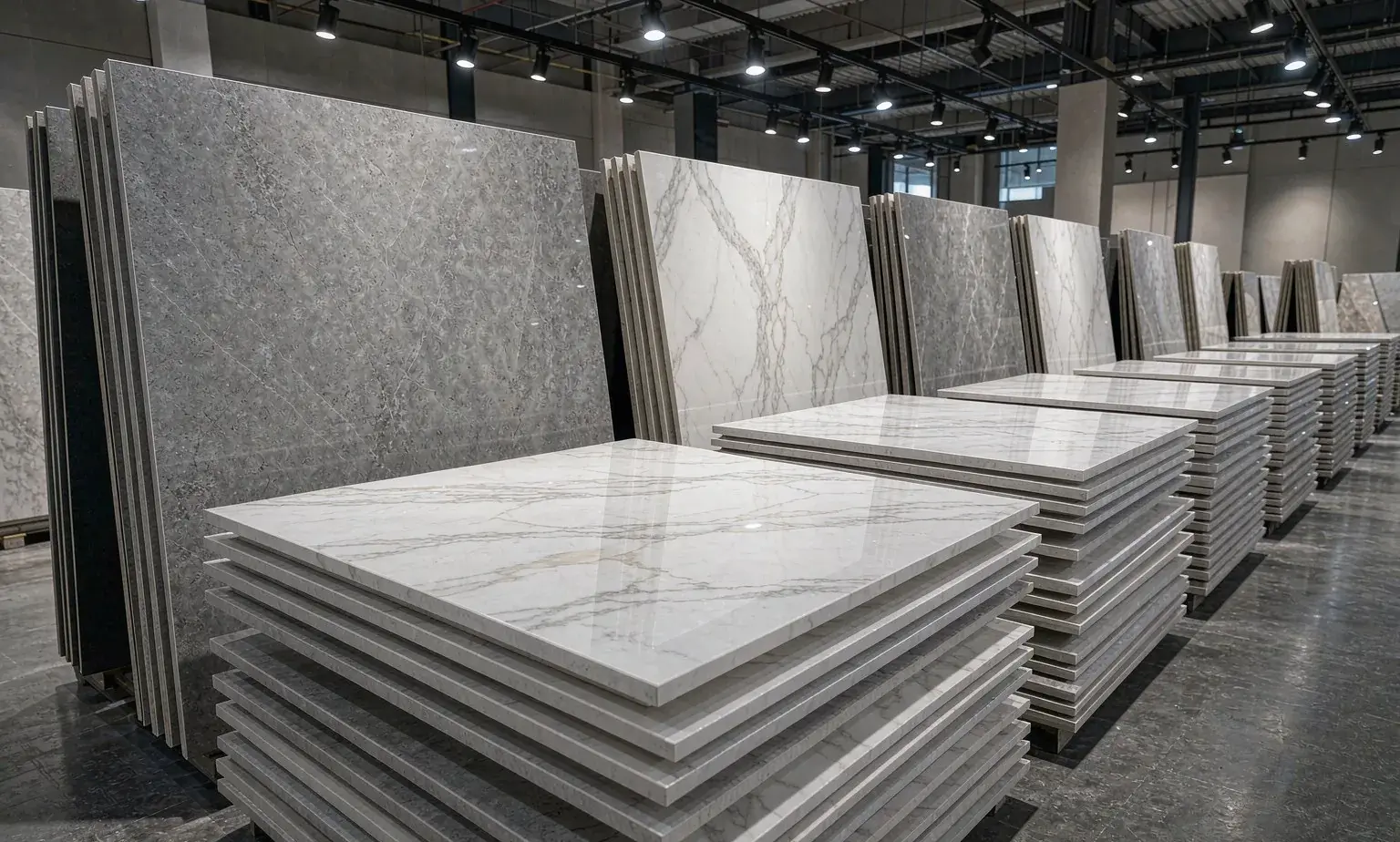
Ask for quarry ownership or partnership evidence, processing base details, slab stock photographs, factory test reports and same-batch dry-lay photographs. A genuine source supplier can specify quarry face, batch and slab; a pure trader usually can only offer stock photographs.
Beyond price
Price is not everything. Confirm fabrication capability (cut-to-size, edge profiling, waterjet, bespoke shapes), quality control (ISO systems, test reports), installation support and after-sales. The cheapest quote often costs more overall once fabrication or installation problems appear.