The six cost components
1) Stone unit price, by variety, grade and slab size. 2) Format: 600x600 and 800x800 carry different cutting costs. 3) Fabrication: edge profiling, chamfering, anti-slip grooving. 4) Wastage: book-matched layouts usually waste 10 to 20 percent, random layouts 5 to 8 percent. 5) Transport and handling, by district, floor and lift access. 6) Laying labour, depending on substrate and pattern.
Which format is best value?
Hong Kong living rooms most often use 600x600 and 800x800. Small flats benefit from 600x600 with lower wastage and cheaper labour; large units use 800x800 or larger for fewer joints and a more open feel, but substrates must be flatter and labour costs more. A 600x1200 plank layout balances look and cost.
Three genuine ways to save
1) Choose varieties with high yield and stable supply instead of scarce material that inflates wastage. 2) Dry-lay and book-match at the factory, then lay by number on site to cut site cutting waste. 3) Reuse offcuts for window sills, thresholds and bathroom shelves so one slab serves several purposes.
Installation and handover checks
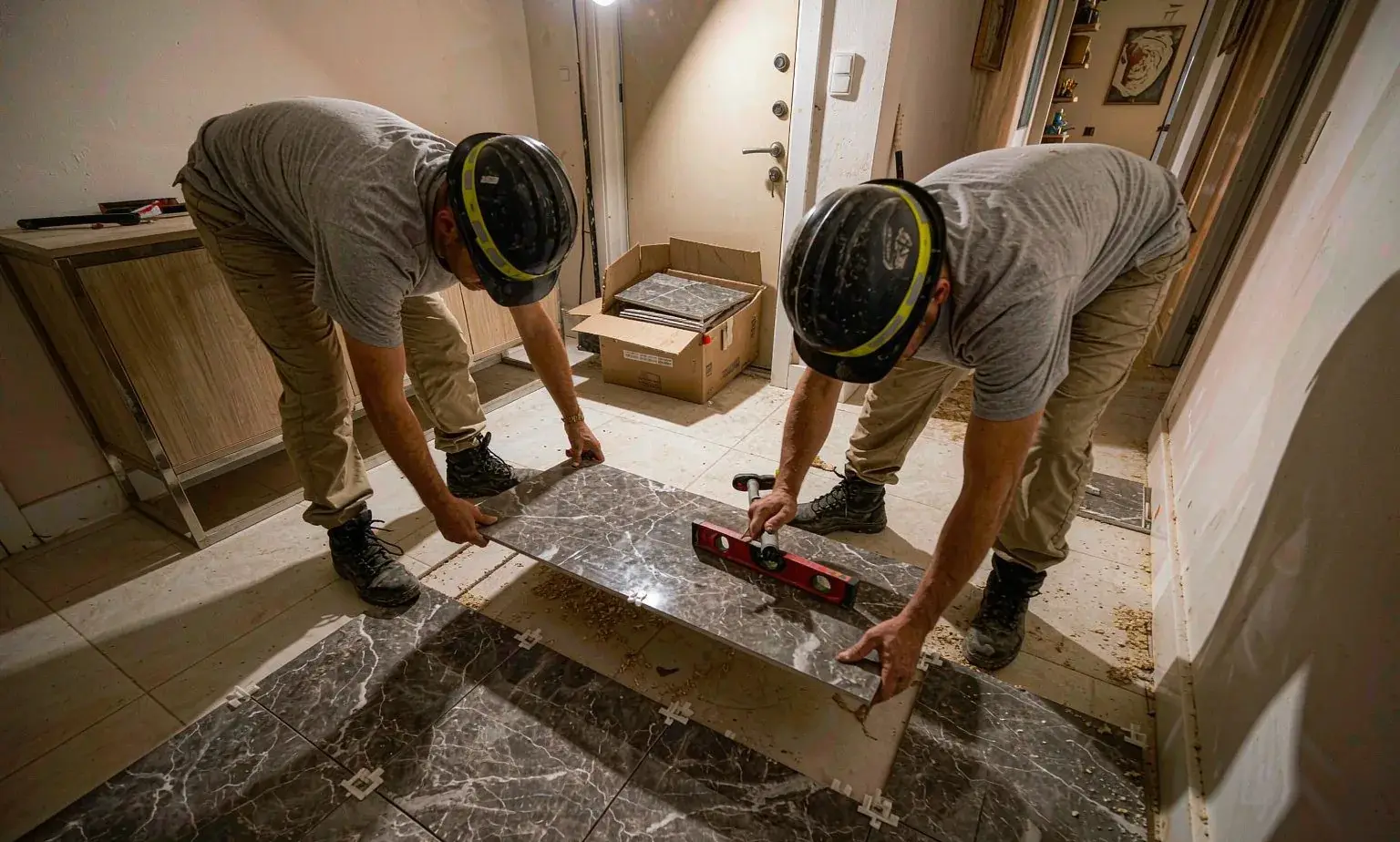
Measure, dry-lay, factory cutting, delivery, substrate preparation, laying, grouting, sealing, handover. At handover check flatness, consistent joint width, colour variation or cracks, hollow areas by tapping with a rubber mallet, and full grout coverage.